How CGPA Impacts Your Job Search and Academic Profile
When you’re a student, one of the key metrics of your academic performance is your Cumulative Grade Point Average (CGPA). But how does CGPA influence your job search and academic profile? Does it affect your career prospects or higher education opportunities? In this article, we will dive into the significance of CGPA and how it plays a role in shaping your future.
The Importance of CGPA in Your Academic Profile
Your CGPA serves as a reflection of your academic capabilities. If you need to convert your CGPA to percentage, use our CGPA to Percentage Calculator. This can give you a better understanding of how your CGPA translates in different academic systems
1. Admission to Postgraduate Programs
For many universities, especially those offering master’s and Ph.D. programs, CGPA plays a crucial role during the admissions process. A higher CGPA is often required to meet the eligibility criteria, especially for competitive programs. Top-tier institutions typically prioritize candidates with higher academic scores as they reflect strong analytical and intellectual abilities.
2. Scholarships and Grants
A high CGPA increases your chances of receiving scholarships and grants. Many educational institutions offer merit-based financial aid that requires students to maintain a high academic standing. If you’re planning to pursue higher education, a strong CGPA can significantly improve your eligibility for financial assistance.
3. Ranking and Recognition
In academic environments, CGPA is often used to rank students for awards, internships, and other honors. A higher CGPA can set you apart, giving you the chance to be recognized for your academic excellence. This recognition can open doors to prestigious academic positions and help you build a stellar academic profile.
The Role of CGPA in Job Search
As you transition from student life to the professional world, CGPA continues to play a significant role in your job search. Employers use it as an initial indicator of discipline and academic potential. Here’s how CGPA impacts your job prospects:
1. First Impressions Matter
For fresh graduates with little to no work experience, CGPA becomes one of the key metrics that employers use to evaluate your academic background. A good CGPA suggests that you have strong foundational knowledge in your field of study, which is crucial when applying for your first job.
2. Industry-Specific Relevance
While CGPA is important in certain industries, it may not hold the same weight across all sectors. For example, industries like engineering, finance, and technology often value a strong academic record when recruiting new employees. However, in creative fields such as marketing, advertising, or design, employers are more likely to focus on practical skills, portfolios, and real-world experience rather than a perfect CGPA.
3. Career Advancement and Promotions
Although CGPA might not hold the same weight once you’re established in your career, it can still impact your starting salary and promotion opportunities. Some companies offer higher initial salary packages to candidates with exceptional academic records. Furthermore, certain employers might place more emphasis on academic performance when considering promotions, especially early in your career.
Does CGPA Matter in Every Industry?
While CGPA plays an essential role in several fields, its significance can vary. Here’s a breakdown of how CGPA is perceived across different industries:
1. Tech and Engineering
In industries like software engineering, IT, and hardware development, employers often place a premium on technical skills. However, CGPA is still used as a quick filter, especially when evaluating entry-level candidates. A higher CGPA in these fields demonstrates the ability to handle complex problem-solving and technical concepts.
2. Business and Marketing
In business-related fields, such as management, sales, and marketing, a CGPA is generally less important. Employers in these fields tend to prioritize leadership skills, teamwork, communication, and creativity. That said, a decent CGPA still shows discipline and intellectual capabilities, which can be an added bonus during the hiring process.
3. Creative Industries
For artistic or creative roles, such as in design, writing, and media, a portfolio of practical work often outweighs academic scores. In such cases, employers might care less about your CGPA and focus more on your creativity, experience, and practical skills that align with the job requirements.
How to Improve Your CGPA and Academic Profile
If you’re looking to boost your CGPA and strengthen your academic profile, here are some strategies to follow:
1. Set Clear Academic Goals
Define specific targets for each semester or academic year. This will help you stay focused and give you a clear direction on what you want to achieve.
2. Develop a Study Schedule
Effective time management is key to achieving a high CGPA. Plan your study sessions, break your syllabus into manageable chunks, and stay consistent with your work.
3. Engage in Active Learning
Simply attending classes is not enough. Engage with the material through discussions, practice problems, and attending additional workshops or tutorials if needed.
4. Seek Help When Needed
Don’t hesitate to approach professors or peers for help if you’re struggling with certain subjects. Group study sessions can also enhance your understanding of complex topics.
5. Review Past Papers and Assignments
Studying past exams and assignments helps you understand the exam pattern and gives you insight into what topics are likely to be tested.
Conclusion
Your CGPA is an essential component of your academic profile and can have a significant impact on your job search, especially when you’re just starting out. It serves as an important metric that reflects your academic abilities and can influence both your admission to higher education and your employment opportunities.
While CGPA matters, it’s not the only factor that employers or academic institutions consider. Skills, experience, and soft skills like communication and problem-solving are just as important, especially as you progress in your career.By balancing academic performance with real-world experience, you can build a well-rounded profile that makes you a competitive candidate in both the academic world and the professional job market.
FAQ’s
1. How to calculate CGPA?
To calculate CGPA, add up the grade points for each subject and divide it by the total number of credit hours. For example, if you have four subjects with grades corresponding to the points 4, 3, 4, and 2, your CGPA would be calculated as follows:
CGPA = (4 + 3 + 4 + 2) / 4 = 3.25
2. How to convert CGPA into percentage?
To convert CGPA into percentage, most universities use the formula:
Percentage = CGPA × 9.5.
For example, if your CGPA is 8.0, then:
Percentage = 8.0 × 9.5 = 76%
3. What is CGPA?
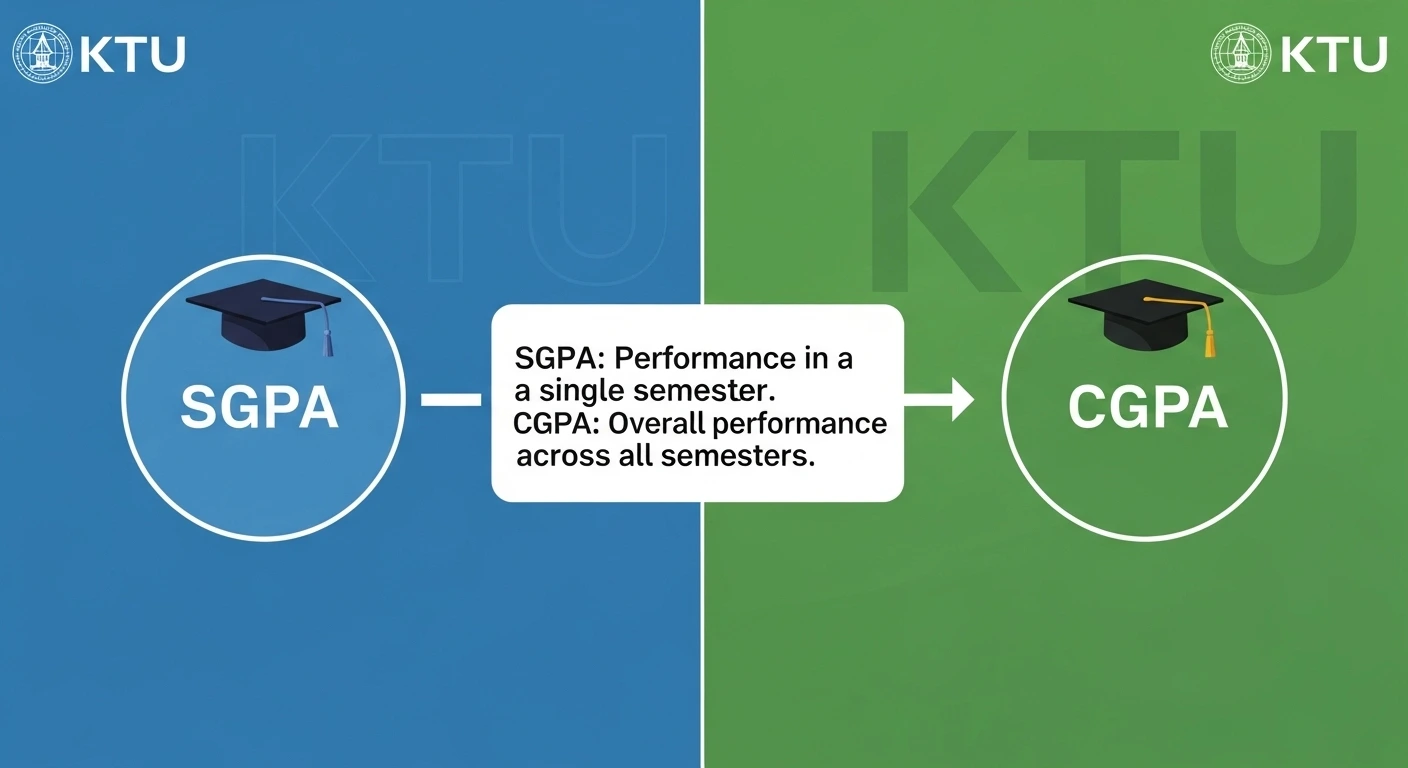
CGPA stands for Cumulative Grade Point Average. It is a grading system used to measure a student’s academic performance over a period, typically throughout a semester or academic year. The CGPA is calculated by averaging the grade points earned in all subjects.